Oven models · M Series
Wolf DO30TM Double Oven: Which Cavity Is at Fault?
DO30TM/S/TH 30-inch built-in double oven Built 2015–2023
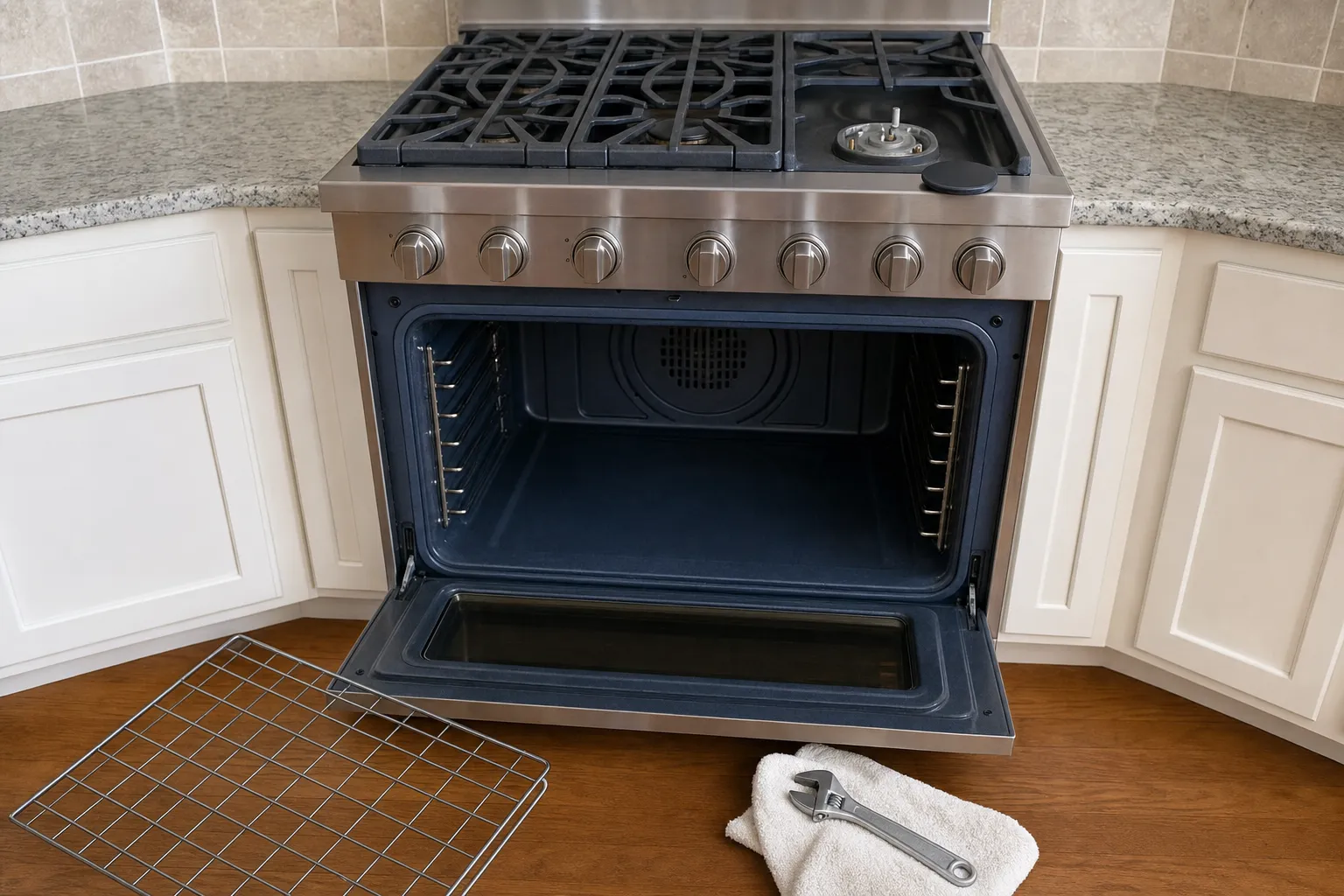
A DO30TM stacks two ovens under one set of controls, and a symptom can start in either. Run each cavity on its own before booking, note which one misbehaves, and tell Wolf Repair Bellevue, (425) 629-0033; the $89 visit then begins at the right door and ends with one price.
- Written and checked by
- Imogen Fairhurst
- Dated
- Bench speciality
- ovens and calibration
- Years at it
- 12
- Control panel and board
- Cooling-air path behind the panel
- Broil element
- Temperature sensor
- Convection fan (upper oven; lower varies)
- Bake element (often hidden below the floor)
- Door gasket
- Self-clean door lock
- Door hinges
What fails on it
- Sensor lagging in one oven One cavity reaches its setting on the display but trails the thermometer. That cavity's own sensor is the first suspect.
- Convection fan in one oven Grinding, ticking or silence where there used to be a steady hum, heard only while that cavity runs a convection mode.
- Cooling fan Each cavity has its own. One that grinds or has stopped is a real fault; one that keeps running long after cooking is doing its job.
- Element in one oven Bake or broil stops heating in one cavity only. There is no set band for elements; they are quoted after the diagnosis.
- Shared control Both ovens ignore the panel, or both go wrong together. Only then does the control come into it.
Test the two ovens one at a time
Put a separate oven thermometer on the middle rack of the upper cavity, pick a bake setting you use often and let it preheat fully. Note what the thermometer says, switch that oven off, then repeat the whole thing in the lower one.
Listen as well as read. A new grinding or ticking on convection belongs to the fans of one cavity, and it helps to know which one before anybody arrives.
What the pair share
Each oven has its own sensor, elements, fans and door lock. The control is where the two meet: Wolf’s guide points out that while one cavity runs a clean cycle, the other cannot be used.
So a symptom confined to one oven is usually that oven’s own part. A symptom in both sends the search to the breaker first and to the control after it.
Common questions
- Why is a fan still running after I turned both ovens off?
- That is most likely a cooling fan, and it is meant to. Wolf says the cooling fans in its electric ovens run long after cooking ends, cannot be switched off, and that a full cool-down can take hours. It becomes a fault only if the fan grinds, stops while the oven is hot, or never runs at all.
- Which cavity has the model plate on a DO30TM?
- The lower one. Open the bottom door and look low on the left, near the trim: DO30TM/S/TH is printed there beside the serial number. Have both to hand when you call Wolf Repair Bellevue, (425) 629-0033, along with which cavity is misbehaving, so the likely parts are looked up before the visit.