Oven models · Gas range
Wolf GR60 Range Ovens: What Usually Fails?
GR606CG · GR606DG · GR606F Gas range Built 2013 on
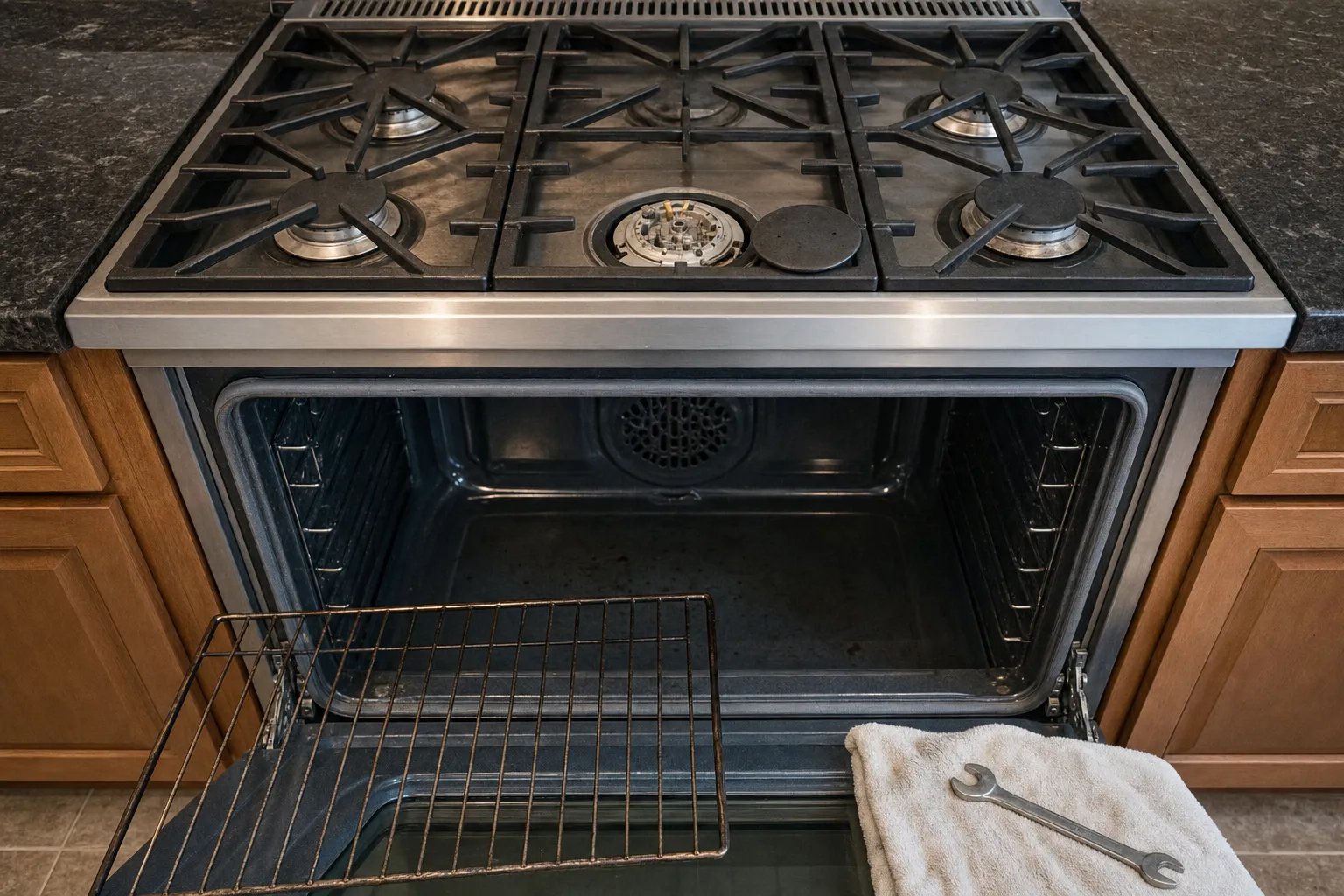
Wolf's 60-inch gas ranges, the GR606CG, GR606DG and GR606F, have been built since 2013 with two ovens side by side. When either one lights late, cooks off its setting or stops sealing, Wolf Repair Bellevue, (425) 629-0033, checks that oven on its own during the $89 visit.
- Written and checked by
- Imogen Fairhurst
- Dated
- Bench speciality
- ovens and calibration
- Years at it
- 12
- Surface burners on top
- Oven knob and control
- Broil burner
- Convection fan behind its cover
- Bake burner and its igniter
- Door gasket
- Door hinges
What fails on it
- Hesitant lighting Clicking that drags on longer than it used to, or an oven that only catches at the second attempt, in one oven or both. The igniter at the burner is the usual suspect.
- Flashing indicator The oven failed to confirm a flame twice and locked itself out. Turning that knob off and on once is fine; a repeat means booking a visit.
- Cooking hot or cold Food done too fast or too slowly against the recipe in one oven. Compare it with an oven thermometer once the indicator light has gone out, not before.
- Door no longer closing square A door that sags at one corner, or lets warmth past its edge, points at its hinges or its seal. The other door is unaffected.
- Crazed or chipped porcelain Fine lines or small chips in the enamel lining look worrying, but Wolf's guide treats them as cosmetic marks from heating and cooling, not a fault.
One range, two ovens to test
Wolf’s drawing of the 60-inch gas range shows two oven doors of matching width side by side, and each oven is set on its own. That is why the first question on the phone is which one, and what it did.
Before calling, bake in each separately, let preheat finish until the indicator light goes out, and set an oven thermometer on the middle rack. A difference between the two ovens tells us more than any single reading.
Owner checks, and where they end
Turn the knob fully onto a temperature, and if you cook with convection, start the fan only once preheat is done, as Wolf advises for its GR ovens. If nothing responds at all, look at the breaker.
Nothing should cover the openings over and under the doors, where air comes in and exhaust goes out. Never line an oven floor with foil or stand pans on it; Wolf warns that both damage the porcelain. Panels, oven floors and the gas connection stay closed until the visit.
Pricing oven by oven
Ignition parts and door hinges or seals are priced from the two bands in the box above. A temperature fault, the gas valve or the wiring is quoted once the cause is known. Every figure is given before work starts, and the $89 diagnosis is credited if the repair goes ahead.
Common questions
- Should I clean the door seal on my GR60 ovens?
- No. Wolf's guide for these ranges tells owners to leave the oven gasket uncleaned, since scrubbing or moving it can break the seal it makes. Wipe the glass and the cavity once they are cool and keep cloths off the gasket. A seal that already looks flattened or torn falls under the door band shown near the top of this page.
- Is it normal for a GR60 oven to pop or bang while heating?
- On a new range, yes. Wolf explains popping during preheat or cooling as the new oven cavity expanding and contracting. If the noises carry on well past the early weeks, or turn up alongside late lighting, mention both when you call Wolf Repair Bellevue, (425) 629-0033, so the ignition is watched closely on the visit.
- Where is the model plate on a GR60?
- Lower the right-hand oven door and look at the bottom edge of the control panel at its far right end, where Wolf places the rating plate on GR ranges. Copy the whole model, for instance GR606DG, along with the serial number. It is one plate for the whole range, so it serves for parts in either oven.