Oven models · E Series
Wolf DO30PE Double Oven: Door, Lock or Heat Problem?
DO30PE/S/PH 30-inch built-in double oven Built 2015–2020
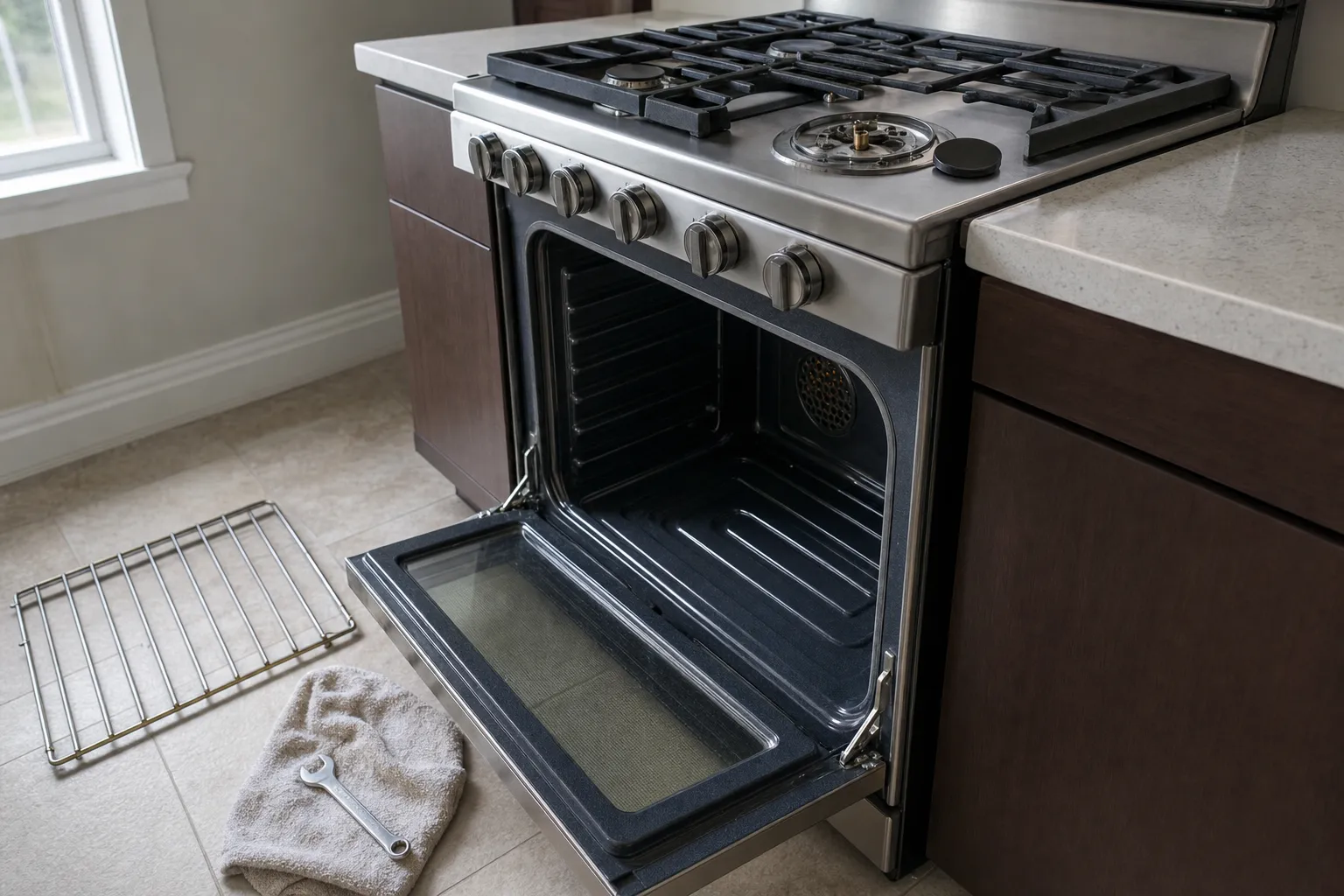
The DO30PE is the Professional-style 30-inch double oven from Wolf's E Series, built from 2015 to 2020. A door that sags, a lock that will not release and a cavity that will not hold heat each point somewhere different. Tell Wolf Repair Bellevue at (425) 629-0033 which one you have, and the $89 visit starts in the right place.
- Written and checked by
- Imogen Fairhurst
- Dated
- Bench speciality
- ovens and calibration
- Years at it
- 12
- Control panel and board
- Cooling-air path behind the panel
- Broil element
- Temperature sensor
- Convection fan (upper oven; lower varies)
- Bake element (often hidden below the floor)
- Door gasket
- Self-clean door lock
- Door hinges
What fails on it
- Hinge wear on a heavy door The door drops at one corner or rubs as it closes. The hinges sit inside the door itself, so it comes off to be inspected.
- Gasket no longer sealing A flattened or split door seal lets heat escape along the top of the door and makes every preheat slower.
- Latch stuck after self-clean The door stays locked well after a cleaning cycle should have cooled. Give it time, then call; never force the handle.
- Sensor reading wrong One cavity bakes consistently cool or hot against a separate thermometer while the other one behaves.
- Cracked door glass A crack or chip in any pane of glass. Stop using that cavity until the glass has been replaced.
Telling the three apart
A door fault is something you can see and feel: the door sits unevenly, rubs on the frame, or lets warmth out along its top edge. A lock fault only shows up around self-clean, since the latch engages when a cycle starts and lets go as the oven cools. A heat fault leaves the door closing and unlocking normally, yet food in one cavity cooks off its setting.
Before you pick up the phone
If a door is locked, let that oven cool completely and keep your hands off the handle. If heat is the question, note which cavity is off and in which direction. If the door is the question, note which side drops or rubs. Those three details decide where the $89 diagnosis begins.
Common questions
- How long should the door stay locked after self-clean?
- Wolf gives no fixed time. The door locks as soon as a cleaning cycle starts and releases during the cool-down once the cavity has reached a safe level, and how long that takes varies. If the oven is cold to the touch and still locked hours later, leave the handle alone and call Wolf Repair Bellevue on (425) 629-0033.
- Should the racks stay in during self-clean?
- No. Wolf asks owners to take out the racks and the rack guides before a cleaning cycle, because the heat discolors them, and to remove a baking stone too. Wiping loose debris from the cavity first also cuts down smoke and smell. None of that affects the lock, but it saves you a second problem.
- Can one oven stay in use while the other waits for a part?
- Often it can, when the fault belongs to one cavity alone, such as its sensor, its door seal or its glass. A problem in the controls or wiring the two ovens share changes that, which is why the answer is given on the visit rather than guessed at over the phone.